
How Businesses Can Stop Choosing and Start Winning
Table of Contents
ToggleIf you run a business, traffic is oxygen. No visitors, no leads, no revenue. But the debate that kills most budgets is this: do you invest in marketing or advertising to drive people to your site?
They’re not the same tool. And if you treat them like they are, you’ll pay for it twice. Once with your wallet, once with missed growth.
After working with service companies globally, here’s what actually moves the needle on website traffic, and how to make both strategies work without wasting money.
Forget textbook answers. Here’s how this plays out in the real world.
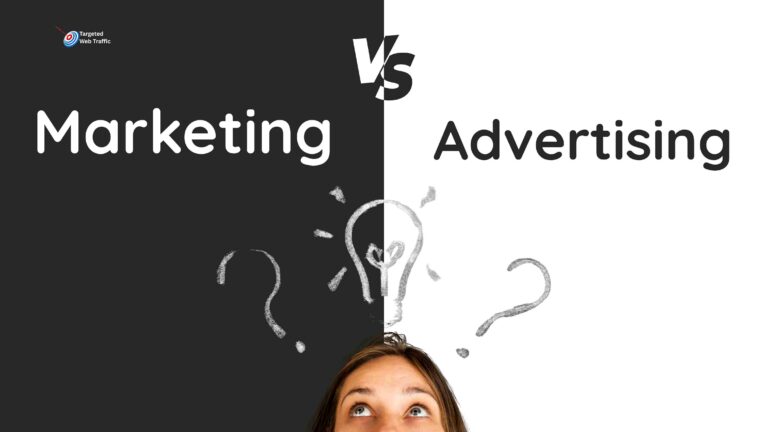
Marketing is everything you do to earn attention you don’t have to keep paying for. It’s your reputation, your content, your SEO, your email list, your reviews, your website experience. Marketing answers: why should someone trust us enough to visit our site and come back?
Advertising is renting attention. You pay platforms like Google or Meta to put you in front of people right now. Advertising answers: how do we get in front of the right person today?
Marketing builds an asset. Advertising buys a result. One compounds. One disappears when the budget does.
Before we pick sides, let’s look at how people actually get to websites in 2026.
| Traffic Source | % of Total Web Visits | Avg. Conversion Rate | Cost Trend |
|---|---|---|---|
| Organic Search | Over 50% | Higher than social | Stable |
| Paid Search Ads | Significant share | Strong for intent | Rising |
| Direct | Double digits | Strong | Stable |
| Social Media Organic | Single digits | Lower | Declining |
| Paid Social Ads | Single digits | Lower | Rising |
| Email Marketing | Single digits | Highest | Stable |
| Referral/Other | Small share | Moderate | Stable |
Source: Combined data from BrightEdge, WordStream, and StatCounter 2025-2026 reports.
Two things jump out. First, organic search drives more than half of all traffic. That’s marketing’s territory. Second, paid ads convert well for high intent searches but costs keep rising. If you rely only on ads, your cost per visitor goes up every year. If you rely only on marketing, you wait months to get traction.
The smart play isn’t choosing. It’s sequencing.
Speed. Launch a search campaign in the morning and have visitors the same day. You control who sees it, when they see it, and what page they land on. For a business needing leads before a busy season, that speed matters.
You also get data fast. Not sure which headline or offer gets more clicks? Run a small test budget and you’ll know in days. That same test with SEO takes months.
You rent every click. Stop paying, traffic stops. There’s no equity.
Second, ad blindness is real. A large portion of internet users run ad blockers. On mobile, people scroll past ads without registering them. If your offer isn’t instantly compelling, you pay for wasted impressions.
Ad platforms are auctions. The more competitors bidding, the higher your costs. As more businesses move budgets online, your cost per visitor climbs even if your ads don’t improve.
That’s why many businesses now buy organic traffic directly to supplement what they can’t rank for yet. It’s a way to get search visitors without fighting the ad auction. If you go that route, vet the source. Low-quality bot traffic destroys your analytics and conversions.
Marketing traffic isn’t bought. It’s earned. And it shows up in three main ways.
When someone searches for your service, you want to be on page 1. That’s not an ad. That’s content, technical site health, backlinks, and business profile optimization.
SEO takes months to work. But once it does, the traffic is free. A single page ranking well for a commercial term can drive consistent visits for years. You don’t pay the search engine for each one.
The catch: Algorithms change. Thin content, spammy links, and slow sites get buried. You need real expertise or you’re invisible.
A generic blog post won’t rank on its own. But a data study on mobile traffic vs desktop traffic for your industry might. Why? Because it’s specific, useful, and citable.
Content drives traffic when it answers questions better than anyone else. That includes comparison guides, case studies, cost breakdowns, and tools. One strong piece can bring referral traffic, backlinks, and rankings at the same time.
Email has the highest conversion rate for a reason. These people asked to hear from you. Every email you send is traffic on demand.
Direct traffic comes from brand recall. Sponsor events, get featured in industry press, or build offline visibility. People type your name in directly. That’s marketing’s long game.
Here’s where traffic plans fail: ignoring how people actually browse.
Globally, the majority of website visits are mobile. But conversion rates are typically higher on desktop.
What does that mean for marketing vs advertising? Ads on mobile get clicks but fewer leads because forms are harder to fill. SEO blogs get read on mobile but converted on desktop later. If your site isn’t fast and mobile-friendly, both channels leak money. Understanding the difference between mobile and desktop behavior changes your entire strategy, from ad creative to page layout.
One-size-fits-all advice gets you killed. Three realities shift the balance in any market:
Here’s the ugly truth nobody tells you: Most paid and organic traffic leaves without taking action. You can win the traffic battle and still lose the war.
If your website traffic is not converting, advertising makes the problem more expensive. You’re paying per visitor to watch them bounce. Marketing at least fails cheaper.
Before you spend another dollar on either, fix these:
Traffic without conversion is a vanity metric. Both marketing and advertising have to connect to a site that sells.
| Goal | Best Channel | Why | Expected Timeline |
|---|---|---|---|
| Launch a new service | Advertising | Instant visibility to test demand | Immediate |
| Lower cost per lead | Marketing/SEO | Free clicks after rank | Ramps over months |
| Promote an event | Paid Social Ads | Target by interests + location | Immediate |
| Build long-term leads | Content + Email | Own the audience | Compounds monthly |
| Recover from ranking drop | Buy Organic Traffic | Fill gap while fixing SEO | Immediate |
Notice the pattern. marketing vs advertising and Advertising wins on speed and certainty. Marketing wins on cost and durability. If you need visits this month, you buy them. If you need visits every month without paying forever, you earn them.
The best companies don’t debate marketing vs advertising. They use advertising to fund marketing.
Launch search and social ads focused on your core services using a tightly controlled budget. At this stage, the objective isn’t immediate profit — it’s gathering market intelligence. Identify which headlines attract clicks, which landing pages convert best, and which audiences are most likely to buy. Pause underperforming ads quickly and reinvest in what works.
Take your best ad headline and make it your H1. Take your best converting audience and write content just for them. Build service pages for locations that bought. Start SEO and email capture. This is where you transition from renting to owning.
Shift most of your budget to marketing: SEO, content, email, reviews. Keep a portion in ads for retargeting, promotion, and filling gaps. Use ads to boost new content, not replace it.
If you need traffic while SEO ramps, supplement with targeted visitors from sources that match your customer profile. It’s not a forever strategy, but it prevents flatline revenue while you build.
Advertising is a faucet. Marketing is a well. You need the faucet when you’re thirsty today. You need the well so you don’t die of thirst tomorrow.
If you’re running a business, start here: fix your website, claim your business profiles, and get reviews. That’s marketing that pays over time. Then run ads to your best page to get immediate data and leads.
Use advertising for speed. Use marketing for scale. And if your traffic isn’t converting, stop buying more until you fix the leak.
That’s how you drive more traffic without wasting your budget.